Generative artificial intelligence has made it possible to produce convincing images in a matter of seconds. For artists, this poses a new problem: it is no longer enough to create an original work; it may also be necessary to demonstrate how, when, and by whom it was created.
For collectors, the challenge is similar. An attractive image, a signature, or a printed certificate alone do not guarantee that the work is authentic, unique, or primarily created by a person.
The solution is not to find a perfect piece of evidence. It is to create a chain of trust made up of several consistent pieces of evidence: process documentation, original files, certificate of authenticity, ownership history, invoice, a statement about the use of AI, and, when possible, verifiable digital credentials.
Quick Answer
To prove that a work is original and human, document its creation from the beginning, assign it an inventory number, keep sketches and source files, issue a detailed certificate, record its provenance, and clearly explain if and how you used artificial intelligence.
None of these pieces of evidence is infallible individually. Together, however, they allow for building a verifiable story that is much harder to falsify.
What does it mean for a work to be “original and human”?
Before presenting evidence, it's worth clarifying what you're trying to prove. In the art market, words like original, authentic, and made by a person don't mean exactly the same thing.
An original work
It can be a unique piece created by the artist, but also a photograph, engraving, or print belonging to an authorized limited edition. A work can be original even if several copies exist, as long as the edition is correctly defined and documented.
An authentic work
It is a work correctly attributed to the artist listed as its author. Authenticity answers a specific question: was this work really created, authorized, or supervised by the person to whom it is attributed?
A work of human authorship
It is a work in which the substantial creative decisions originate from a person. Having used a digital camera, Photoshop, a graphics tablet, a modeling program, or automated tools does not, by itself, turn a work into “AI art”. The relevant question is what decisions the artist made and how much of the result was automatically generated.
The provenance of a work
Provenance is the documented history of the piece: who created it, where it was displayed, who bought it, and how ownership changed hands. In museum research, provenance may include dates, owners, exhibitions, publications, inscriptions, labels, and other physical marks.
A work can be authentic and have incomplete provenance. It can also have numerous documents and not be authentic if those documents are false. This is why it is important to analyze the consistency of the whole.
Why an AI detector does not prove authorship
A common reaction is to upload the image of the work to an artificial intelligence detector. The result may seem like an objective answer: “92% human” or “78% AI-generated.”
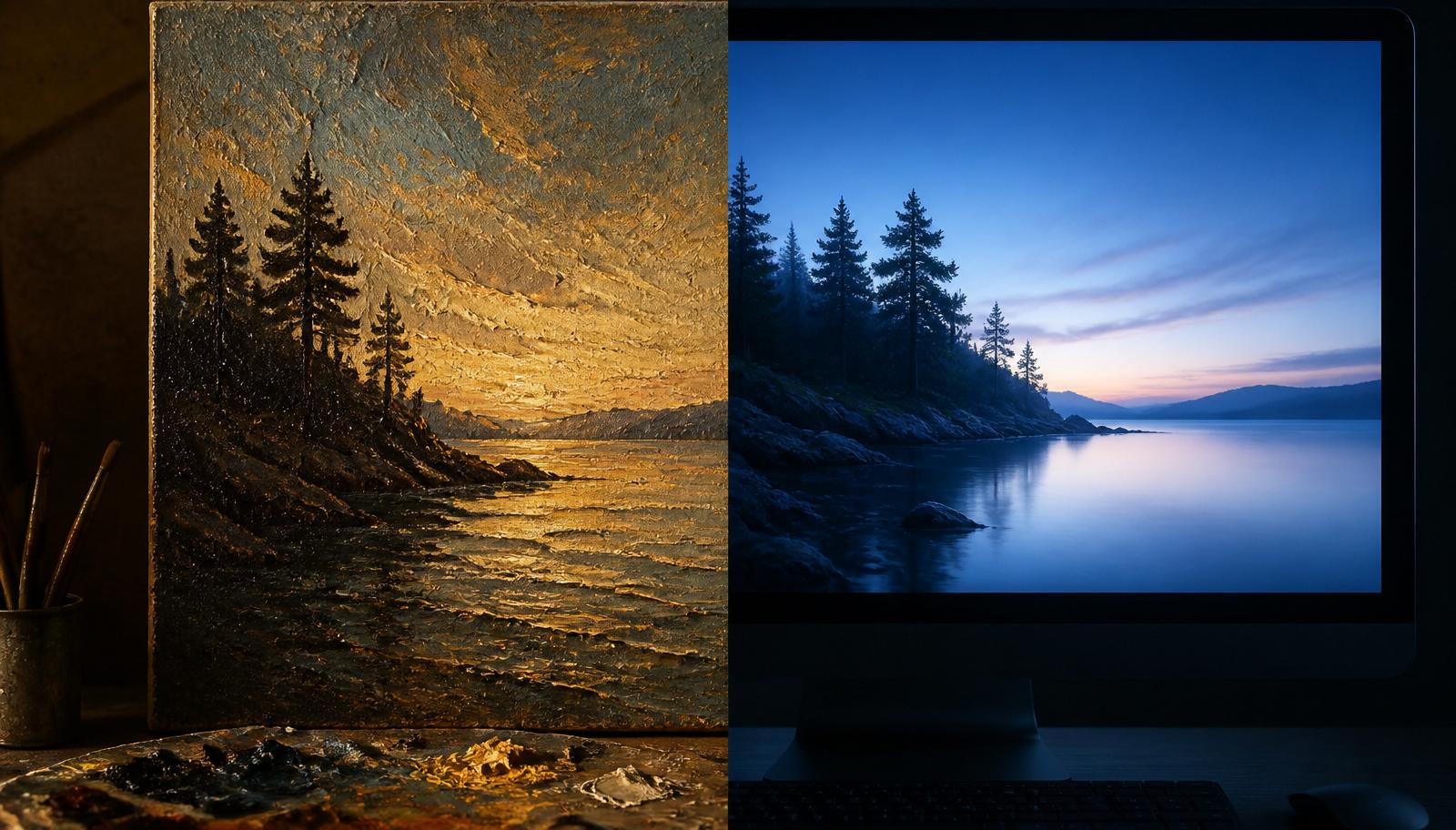
The problem is that these tools can produce false positives and false negatives. The Content Authenticity Initiative expressly warns that AI-generated image detectors can be unreliable and need constant updating as models and manipulation techniques change.
A compressed, retouched, or poorly lit photograph of a physical painting could be misclassified as artificial. Similarly, an AI-generated image that is subsequently edited can evade some detectors.
Therefore, a detector can be used as a supplementary signal, but it should not be treated as an expert opinion or as definitive proof that a work is human.
Nor are these sufficient on their own:
- A visible signature.
- A photograph of the artist with the finished work.
- A brief video of the process.
- Conventional metadata of a file.
- A generic certificate.
- A date recorded on a blockchain.
- A screenshot of digital credentials.
The question is not which document seems most technological, but whether all the evidence describes the same story and can be independently verified.
How an artist can prove human authorship of their work
1. Assign a unique identifier to each artwork
The first step doesn't require any complex technology. Create an inventory number that is never repeated and use it in all documentation related to the piece. For example: ML-2026-P-014.
This code could mean: artist's initials (ML), year (2026), type of artwork (P, for painting), and sequential number (014).
The same identifier should appear in:
- Your inventory.
- The certificate of authenticity.
- The invoice.
- The artwork's page on your website.
- The photographic archive.
- Exhibition or consignment documents.
- Packaging or shipping label.
- The sales record.
Do not use titles as the sole identifier. There may be several works called Untitled, Landscape, or Blue Series.
2. Document the process, not just the result
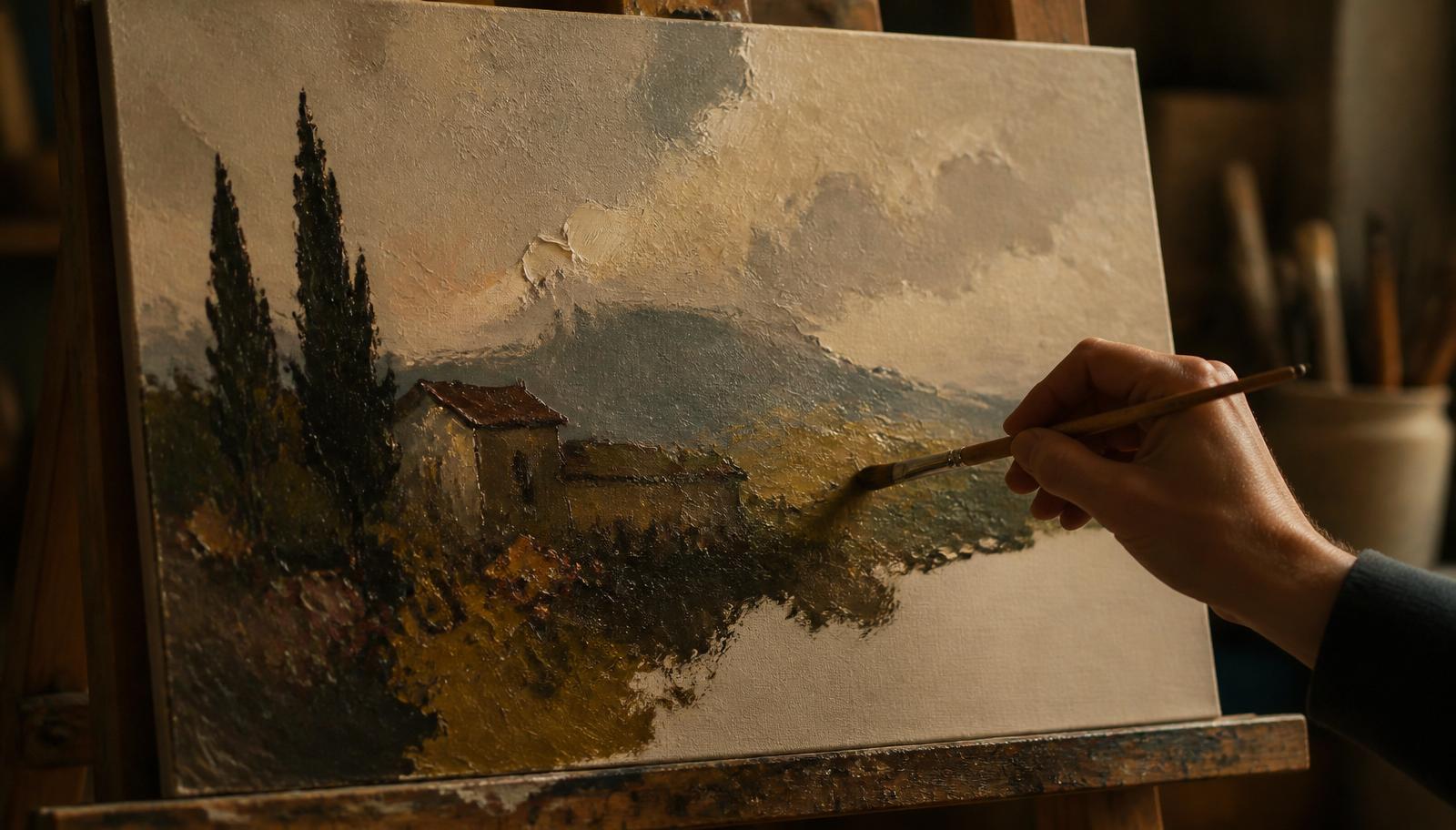
A photograph of the finished artwork proves you had access to it, but it doesn't explain how it was created. It's more useful to document various moments of the process.
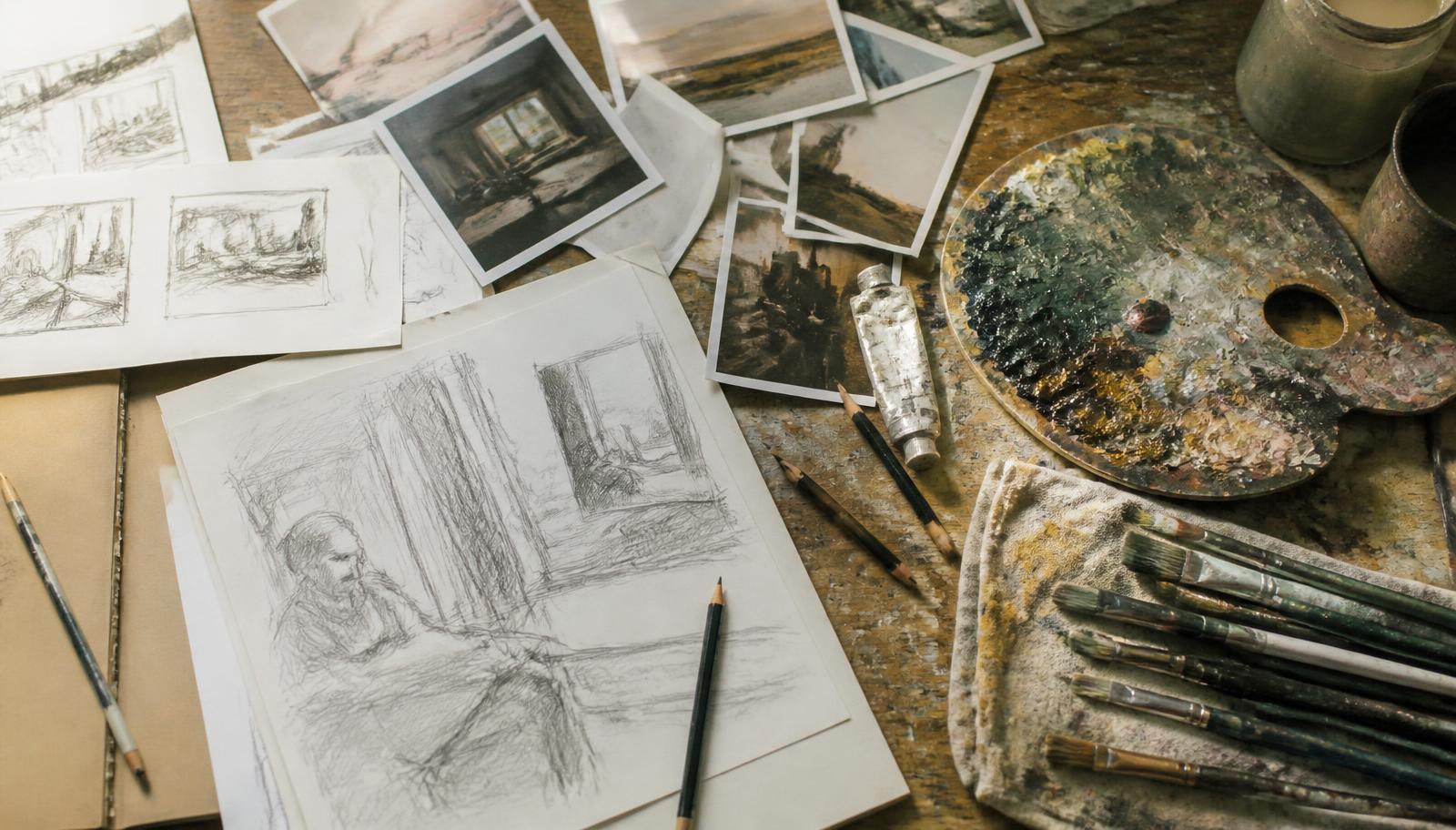
For a painting or drawing, you can keep:
- Sketches and composition tests.
- Photographs of the surface before starting.
- Images of different stages.
- Photographs of the palette and materials.
- Details of layers, corrections, or changes.
- A final view of the front, back, and sides.
For a digital artwork, keep:
- The native file with its layers.
- Intermediate versions.
- Editing histories when available.
- Initial sketches.
- Brushes, textures, or resources created by you.
- Partial recordings of the process.
- Creation and modification dates.
- Successive exports.
It's not necessary to record every second of the work. The goal is to create a sufficiently coherent sequence to show the evolution of the artwork.
Good documentation contains decisions, doubts, and changes. Precisely these intermediate stages often provide more context than a perfectly produced video that only shows the artist putting the finishing touches.
3. Retain source files and original photographs
The artist should maintain a private archive with the materials that support the creation story:
- Photographs in original format and RAW files.
- PSD, Procreate, TIFF, or other native formats.
- 3D models.
- Scanned sketches and study notes.
- Print proofs.
- Invoices for materials or casting.
- Emails related to a commission.
- Preliminary versions sent to the client.
- Photographs of exhibitions or the studio.
It is not necessary to provide all these files to the buyer. Many may contain private information, reusable resources, or technical details that the artist wishes to protect.
The buyer may receive a selection of evidence, while the artist retains the complete file for future verification. For a work of higher value, the contract may state that the source files remain under the artist's custody and may be reviewed by an independent expert in case of a dispute.
4. Publish a clear statement about the use of artificial intelligence
Simply saying “my art is not AI” can be too ambiguous. A professional statement explains what tools were used and what decisions remained under the artist's control.
| Category | Recommended Statement |
|---|---|
| No Generative AI | “This work was conceived and executed by the artist without the use of generative artificial intelligence systems to produce images, compositions, or visual elements.” |
| AI used outside the work | “AI was used only for administrative, translation, research, or writing tasks. It was not used to generate the visual content of the work.” |
| AI as reference or support | “AI tools were used during the research or reference phase. The final composition and execution were performed and decided by the artist.” |
| AI-assisted work | “The work incorporates elements produced with generative tools. The artist performed the selection, direction, editing, combination, and final execution as described in the technical sheet.” |
| Work primarily generated with AI | “The base image was generated using artificial intelligence based on instructions and processes guided by the artist. Subsequent modifications were then made as indicated.” |
Transparency does not automatically detract from a work's value. Hiding substantial use of AI can damage buyer trust, especially when the work has been expressly marketed as handcrafted or completely human.
The statement should be specific. “Made by me” does not clarify whether a complete image was generated and then printed, whether AI was used to test compositions, or whether the tool only corrected noise in a photograph.
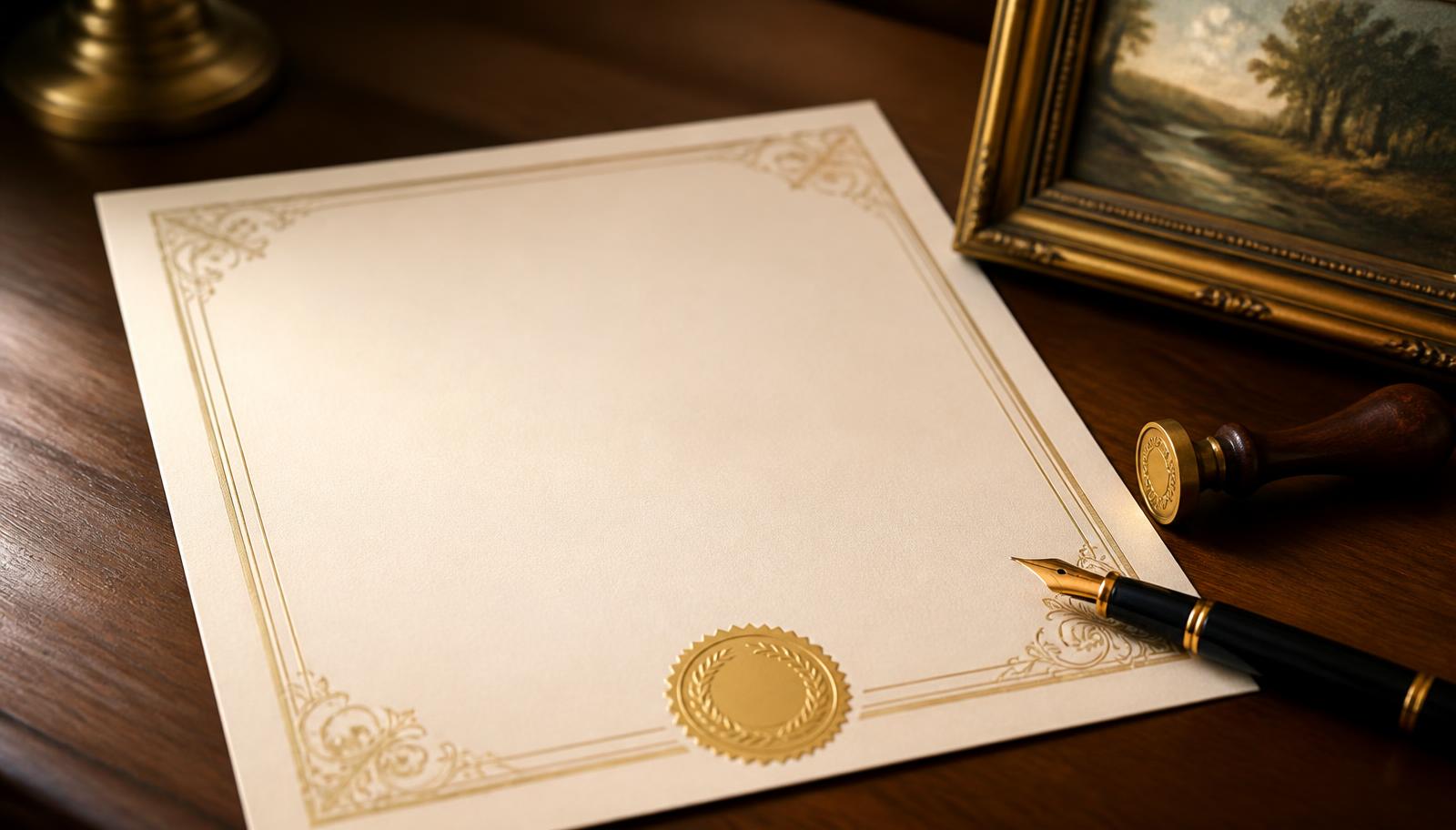
5. Issue a complete certificate of authenticity
A certificate of authenticity is a statement signed by the artist or an authorized entity. It is not a magic bullet, but it helps identify the work and link it to its author. It should include at a minimum:
- Legal name and, when applicable, artistic name.
- Title of the work and year of creation.
- Inventory number.
- Technique, materials, and support.
- Dimensions without frame and, when relevant, with frame.
- Indication of a unique piece or edition.
- Copy number and total edition size.
- Image of the work.
- Artist's signature.
- Date and place of issue.
- Contact details or verification method.
- Statement on AI use.
- Copyright information.
- Details of the first buyer, if applicable.
- Initial provenance history.
Authenticity Statement Model
I, [full artist name], certify that the work titled [title], identified by inventory number [code], was created by me in [year] using [technique and materials].
The work is [unique piece / copy number X of a total edition of X] and measures [dimensions].
In its creation [generative artificial intelligence was not used / AI was used exclusively for… / elements generated by… were incorporated].
This certificate is issued on [date] and is exclusively linked to the work described and photographed in this document.
Signature: ____________________
Place of issue: ____________________
Verification method: ____________________
Certificate number: ____________________
Include a sufficiently detailed photograph, but avoid publishing a complete high-resolution certificate online. An easy-to-download and reproduce copy can facilitate counterfeiting.
For public inquiries, you can show a partial version, hiding the full signature, address, buyer's name, and any private verification code.
6. Create a provenance history from the first sale
Provenance is not only important for old masters or museum pieces. It is easier to build it when the work is still in the studio than to try to reconstruct it twenty years later. The record should indicate:
- Completion date.
- Studio or place of creation.
- First exhibition.
- Gallery or representative and consignment dates.
- Publications or catalogs.
- Sale date.
- Buyer or confidential description of the buyer.
- Subsequent changes of ownership.
- Loans to exhibitions.
- Restorations or modifications and condition reports.
- Known location, respecting privacy.
Marks, gallery labels, inscriptions, bibliography, and exhibition history are elements commonly used in provenance research.
When the work is resold, the new owner should receive copies of essential documentation. The artist or their archive can keep a confidential record of the transfer.
7. Use verifiable digital credentials when possible
Content Credentials are verifiable metadata based on the open standard C2PA. They can record information such as the origin of a file, the tools used, the changes made, and the identity declared by whoever applied the credentials. Unlike conventional metadata, these credentials are cryptographically signed so that subsequent modifications can be detected.
For digital artists, photographers, and creators who publish reproductions of physical works, they can add a useful layer of transparency. However, it is important to understand their limits:
- They do not automatically determine whether a work is true or false.
- They do not guarantee that the identified person is the legal owner.
- They do not always include the creator's identity.
- The information depends on what the tool allows and what the user decides to declare.
- A platform may not display all information.
- Their absence does not prove that the image is false.
The Content Authenticity Initiative itself describes these credentials as a kind of informational label about the origin and history of content, not a verdict on whether something is “real.” Furthermore, C2PA is a voluntary system: a work created with tools that do not support it can be completely authentic even without credentials.
Therefore, Content Credentials should complement, not replace, the certificate, source files, and provenance.
8. Provide a small “work passport”
When selling a work, gather essential information in an organized package. It can exist in physical and digital formats. A basic passport should contain:
- Invoice or sales contract.
- Certificate of authenticity.
- Technical sheet.
- Image of the front and back.
- Inventory number.
- Statement on AI use.
- Conservation instructions.
- Provenance summary.
- Data for future verifications.
- Conditions applicable to a future resale or documentary loan.
The buyer should not depend on a single sheet that can be lost. Keep a copy in your archive and a system to re-issue documentation, clearly indicating that it is a duplicate.
Publish your work with its complete data sheet
At EsglaiArt, each work has its own page with title, technique, measurements, price, and artist's description: a public and dated base on which to support your documentation. Discover how to sell your art online or explore the gallery artists.
How a collector can verify that a work is authentic and human
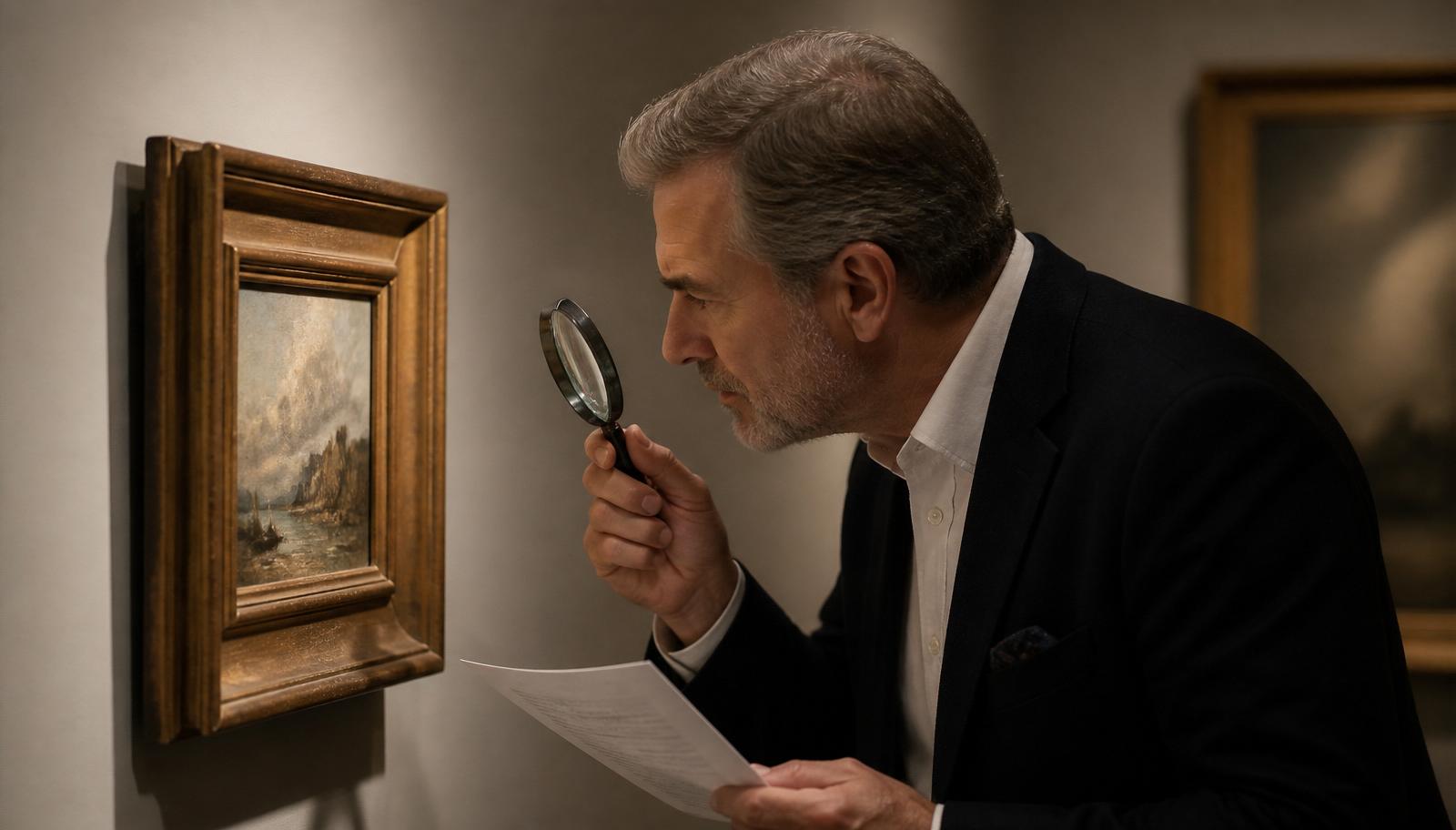
A buyer does not need to become a forensic investigator. They should, however, perform checks proportional to the artwork's price, age, and importance.
1. Verify the seller's identity through another channel
Do not limit yourself to the profile from which you received the message. Verify the identity using the artist's official website, a recognized gallery, an email published in an independent source, a video call from the studio, the artist's archive or foundation, or a confirmed representative.
If a person claims to represent an artist, contact the artist or gallery directly using information found separately.
2. Ask what exactly “original” means
Before purchasing, clarify:
- Is it a unique piece?
- Is it a study or a version?
- Is it a print?
- Does it belong to a limited edition?
- Is it an artist's proof?
- Is it a signed reproduction?
- Is the signature handwritten or printed?
- Was generative AI used?
- Who did the printing, casting, or manufacturing?
An authorized reproduction can be a legitimate purchase. The problem arises when a reproduction is presented as a unique piece or when its nature is not correctly disclosed.
3. Compare the documentation with the object
The certificate, invoice, and artwork should match in title, dimensions, technique, year, inventory number, edition number, signature, photograph, condition, and artist's name.
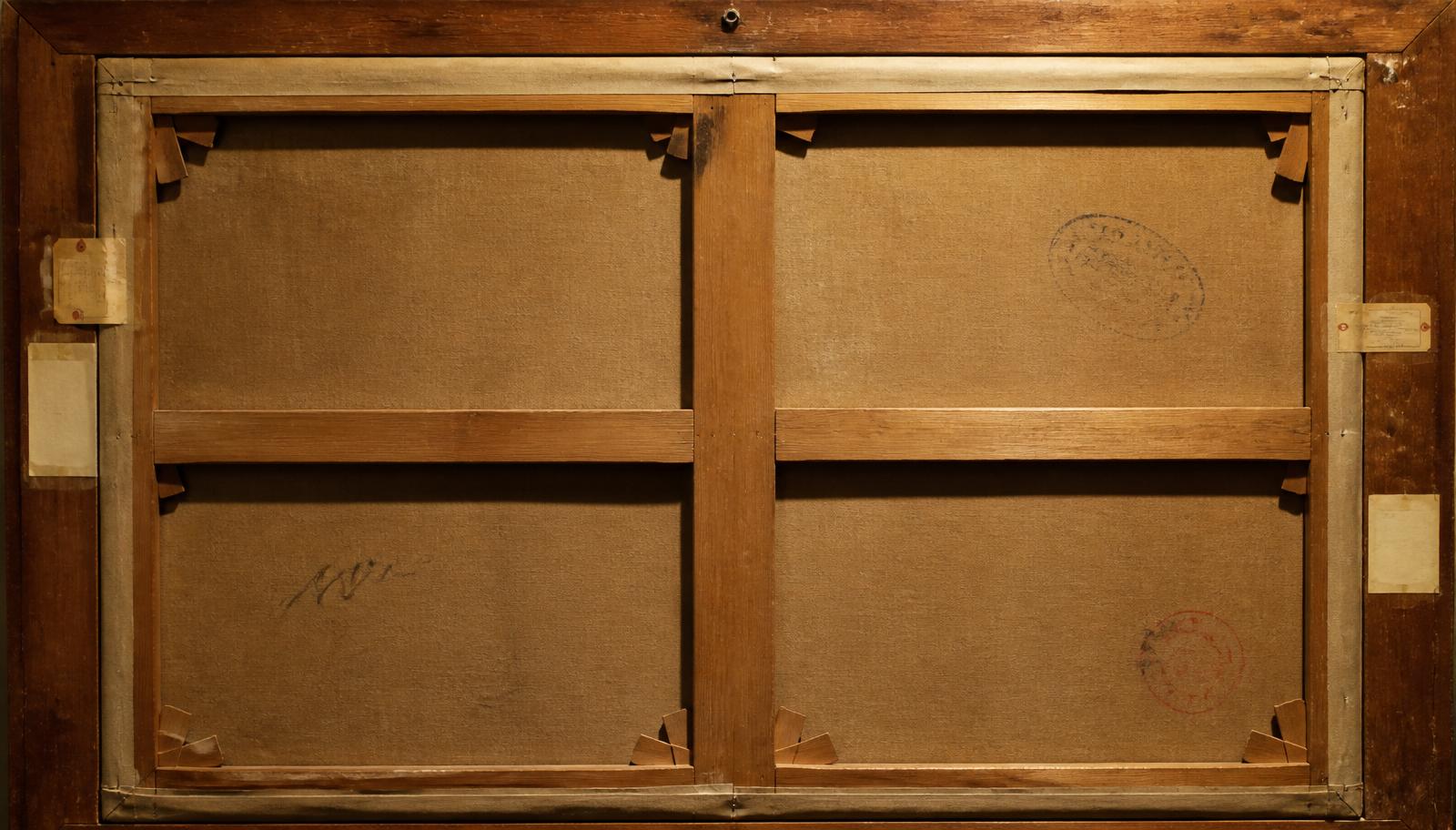
Also check the reverse, sides, base, or frame. Labels, stamps, and inscriptions can provide relevant information. An inconsistency does not necessarily prove a forgery—it could be an administrative error—but it should be resolved before making payment.
4. Request reasonable evidence of the process
When purchasing directly from a contemporary artist, it is reasonable to ask for some images of the process or an explanation of the technique. The artist does not have to hand over all their source files or reveal studio secrets. A coherent selection might be sufficient:
- Initial sketch.
- Intermediate image.
- Photograph of the artwork in the studio.
- Detail of materials.
- Exported file with a date prior to publication.
- Short video explaining a specific decision.
The important thing is not to accumulate hundreds of photographs, but to verify that the evidence fits the piece offered.
5. Ask directly how AI was used
Instead of just asking “is this made with AI?”, use more precise questions:
- Was any visual part generated by an AI model?
- Was AI used to create references?
- Was the initial composition generated?
- Was generative fill employed?
- Were automatic enlargement or restoration functions used?
- What part was drawn, painted, photographed, or modeled by the artist?
- Are the process files or sketches preserved?
- Does the use of AI appear on the certificate and invoice?
These questions allow differentiating a work created entirely by a person from a work assisted or partially generated by AI. The answer does not have to be limited to a yes or no.
6. Review Provenance
For a newly created work acquired directly from the artist, provenance can be brief: artist's studio → current buyer. For an older or resold work, the main transfers should be explainable. Look for previous invoices, exhibition catalogs, publications, dated photographs, gallery labels, auction records, previous certificates, correspondence, restoration reports, or inheritance documents.
An old, continuous, and documented provenance can help support authenticity, although the quality of the documents still needs to be examined. Getty notes that an early or uninterrupted history can help attest to the authenticity of a work.
7. Check Digital Credentials in the Original File
When the seller claims an image contains Content Credentials, request the verifiable file, not just a screenshot. Credentials can show who applied them, what tool was used, when the file was signed, if edits were recorded, if the content incorporated other elements, and if the file was modified afterward.
Remember that these credentials provide information about digital provenance. They do not automatically certify the commercial authenticity of the physical work or replace the analysis of other documents.
8. Demand an Accurate Invoice or Contract
The purchase documentation should describe what you are acquiring. It should include complete work identification, price and currency, taxes, condition, attributed author, nature of the piece, edition number, statement on AI use, documents delivered, applicable policy if a statement proves false, and the rights transferred versus those retained by the artist.
Buying a physical object does not usually mean automatically acquiring the reproduction rights to the image. This point must be clear in the contract.
9. Increase Due Diligence as Value Increases
For a high-priced piece, a historical work, or a complex resale, it may be appropriate to request an independent condition report, an expert opinion, confirmation from the artist's archive or foundation, a provenance review, a materials analysis, a check of stolen works databases, legal advice, and specific contractual clauses regarding authenticity.
The Art Loss Register, for example, conducts due diligence checks for collectors, galleries, fairs, museums, auction houses, financial institutions, and other market participants. Not all purchases require this level of investigation: verification should be proportionate to the risk.
Red flags that artists and collectors should not ignore
Reasons to check twice
- The certificate does not identify the work with a unique code.
- The document uses a generic description that could apply to any piece.
- The photo on the certificate does not exactly match the work.
- The seller refuses to show the back or sides.
- Measurements, year, or technique change between documents.
- A piece is offered as unique but appears for sale multiple times.
- The edition does not have a defined total size.
- The only proof of human authorship is the result of an automatic detector.
- The seller presents a screenshot of credentials but does not allow verification of the file.
- The alleged provenance begins with the current seller, even if it is an old work.
- Urgent payment is demanded without an invoice.
- The seller avoids any independent contact with the artist.
- The “100% human” statement does not explain the process or tools used.
- The certificate appears newly created for a work supposedly in circulation for decades.
These signs alone do not prove that a work is fake, but they do justify an additional check.
What documentation should be kept depending on the type of artwork
| Type of artwork | Especially useful evidence |
|---|---|
| Painting and drawing | Sketches, step-by-step photographs, verso, materials, inventory number, certificate and exhibition record. |
| Photography | RAW file, capture data, contact sheet, shot selection, editing information, printer, paper, and edition record. |
| Digital art | Native file, layers, versions, export history, partial recordings, Content Credentials, and tools statement. |
| Sculpture | Sketches, maquette, mold, casting documentation, materials, workshop invoices, process photographs, and edition numbering. |
| Printmaking | Matrix, state proofs, artist proofs, printer, workshop, paper, technique, total run, and record of copies. |
| Textile art | Sketches, samples, pattern making, materials, weaving or embroidery process, photographs, and collaborator documentation. |
| Hybrid work | Detailed list of components, digital tools, generated elements, manual intervention, and assembly criteria. |
Three levels of authenticity documentation
Basic level
Suitable for lower-priced works sold directly by the artist:
- Inventory number.
- Invoice.
- Certificate.
- Photograph of the artwork.
- AI statement.
- Two or three process images.
- Verification data.
Professional Level
Suitable for galleries, exhibitions, and established collections:
- All of the above.
- Organized process archive.
- Provenance record.
- Exhibition history.
- Condition report.
- Photographs of the front and back.
- Consignment or sales contract.
- Digital credentials where compatible.
- Owner registration system.
Enhanced Level
Suitable for high-value artworks or higher-risk transactions:
- All of the above.
- Independent verification.
- Confirmation from archive, foundation or expert.
- Full provenance research.
- Technical report.
- Stolen artwork record consultation.
- Contractual guarantees.
- Secure custody of source files.
- Protocol for future transfers.
Copyright, Registration, and Human Authorship
In most countries adhering to the Berne Convention, copyright protection arises automatically and does not require prior registration of the work. Some countries offer voluntary registration systems, but their procedures and legal effects vary. The World Intellectual Property Organization also warns that registering a work with a private entity does not automatically grant international protection.
A registration can help document that a certain work or file existed on a specific date. It does not by itself prove that all statements included are true.
The legal treatment of AI-generated or AI-assisted works depends on the country and the degree of human intervention. In the United States, for example, the Copyright Office maintains that human authorship is an essential requirement and analyzes which elements of a work were created by a person.
For an artist using AI, the safest commercial practice is to retain evidence of their creative decisions and accurately describe which parts were personally generated, selected, modified, or executed.
This article provides general information and does not substitute for legal advice applicable to a specific work, contract, or country.
Frequently Asked Questions about Original Art and Artificial Intelligence
Does a certificate prove that a work is authentic?
Not by itself. The certificate is more reliable when linked to a specific work through a photograph, inventory number, detailed description, artist's signature, and a verification method. It should be analyzed along with the invoice, provenance, photographs, and other evidence.
Can one tell if a physical painting was designed with AI?
Not always by observing the finished painting. The artist may have used AI to generate a reference, a composition, or a base image. The best way to clarify this is to review the artist's statement, sketches, process stages, and terms of sale.
Does using Photoshop mean a work is not human?
No. A digital tool can be used to draw, edit, adjust color, or prepare a print under the artist's direct control. The key is to distinguish between tools controlled by a person and systems that generate visual content automatically. When a generative function materially influences the artwork, it should be declared.
Do Content Credentials prove that a work was created by a person?
Not necessarily. They can provide verifiable information about the file's origin, the tools used, and certain modifications, but they do not make a definitive judgment about authenticity or the degree of human creativity.
Is the absence of digital credentials suspicious?
Not on its own. C2PA is a voluntary standard, and many cameras, software, platforms, and artistic processes do not yet generate or retain these credentials.
Should the artist provide the original file to the buyer?
Normally not necessary. The artist can retain the source files and provide a selection of evidence. In significant transactions, it may be agreed that the files will be examined by an independent third party if a dispute arises.
Can an AI-assisted artwork still be original?
It can be original from an artistic or commercial point of view, but the legal answer regarding copyright depends on the jurisdiction and the human creative input. The essential thing is not to present a work substantially generated by AI as if it were entirely handcrafted.
How is an old work documented if there are no photographs of the process?
Its history can be partially reconstructed through invoices, studio photographs, catalogs, publications, correspondence, testimonies, labels, exhibition records, gallery documents, ownership history, and material analysis. The absence of a creation video does not automatically make the work fake: in that case, provenance and expert examination become more important.
Trust does not depend on a single piece of evidence
The goal is not to turn every studio into a forensic laboratory. Nor is it about requiring all artists to record their entire lives or reveal every working file. It's about creating a simple, repeatable system proportionate to the value of the work.
For the artist, documenting the creation protects their reputation, facilitates future sales, and conveys professionalism. For the collector, receiving clear information reduces uncertainty and allows for a more informed decision.
In the age of artificial intelligence, trust will not come from a single label that says “made by a person.” It will come from a consistent story that can be reconstructed: who created the work, how they created it, what tools they used, where it has been, and who vouches for its authenticity.
That history is the true passport of the artwork.
Are you an artist or a collector?
At EsglaiArt, each work is published with its complete data sheet and its own verifiable page. Start selling your art online or explore the original works available.